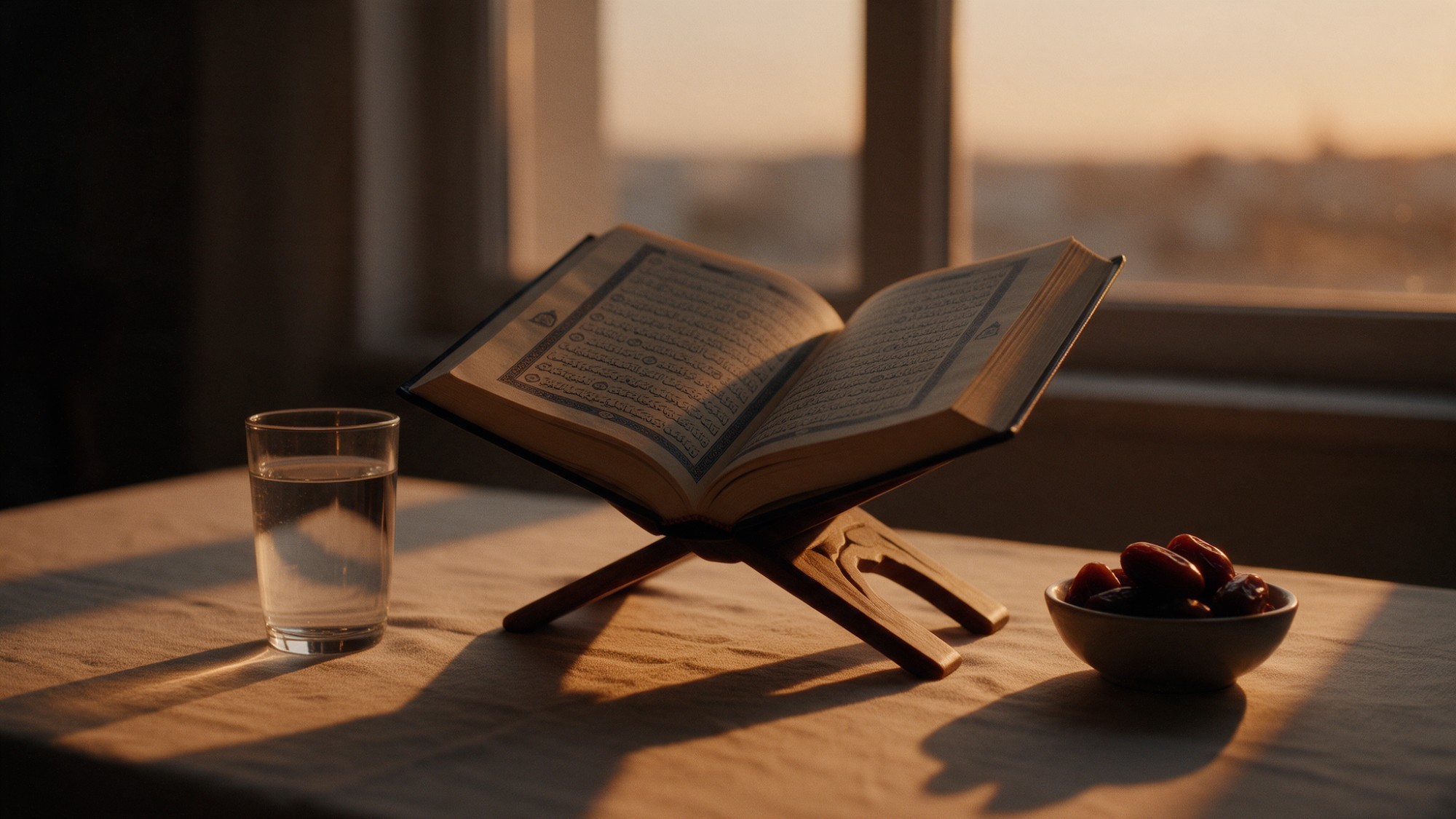
Surah Waqiah Benefits: What's Authentic About Rizq
It usually arrives as a forwarded message. Read Surah Waqiah every night after Maghrib and you will never face poverty. Sometimes there’s a number attached, sometimes a story about someone whose business turned around. Millions of people in Pakistan and India read this surah nightly because of that one promise.
Reading Surah Al-Waqiah every night is a good habit, and nothing here is meant to talk you out of it. But the promise attached to it has a history worth knowing, and the surah itself has a lot more to say about rizq than the forward suggests.
What Surah Waqiah is
Al-Waqiah is the 56th surah of the Quran. It has 96 ayahs and was revealed in Makkah. The name means “the Inevitable Event”, which is the Day of Judgment, and the surah opens by describing it.
Most of the surah is about what happens to people on that day. It sorts humanity into three groups:
وَكُنتُمۡ أَزۡوَ ٰجࣰا ثَلَـٰثَةࣰ فَأَصۡحَـٰبُ ٱلۡمَیۡمَنَةِ مَاۤ أَصۡحَـٰبُ ٱلۡمَیۡمَنَةِ وَأَصۡحَـٰبُ ٱلۡمَشۡءَمَةِ مَاۤ أَصۡحَـٰبُ ٱلۡمَشۡءَمَةِ وَٱلسَّـٰبِقُونَ ٱلسَّـٰبِقُونَ أُو۟لَـٰۤئِكَ ٱلۡمُقَرَّبُونَ
“And you become [of] three kinds. Then the companions of the right, what are the companions of the right? And the companions of the left, what are the companions of the left? And the forerunners, the forerunners. Those are the ones brought near [to Allah].”
Tum log us waqt teen girohon (jamaat) mein taqseem ho jaogey. Dayein bazu waley, so dayein bazu walon (ke khush-naseebi) ka kya kehna. Aur bayein bazu waley, to bayein bazu walon (ki badnasibi ka) kya thikana. Aur aagey waley to phir aagey waley hi hain. Wahi to muqarrab (nearest to Allah) log hain.
(Surah Al-Waqiah 56:7-11)
The rest of the surah describes each group’s end in detail, then turns to the listener and asks a series of direct questions. Those questions are where rizq comes in. We’ll get to them.
The hadith about poverty: where it comes from
The saying behind the forwards is this: “Whoever recites Surah Al-Waqiah every night will never be afflicted by poverty.” It is attributed to the Prophet ﷺ through the Companion Abdullah ibn Mas’ud (may Allah be pleased with him), and it’s recorded by al-Bayhaqi.
The problem is its chain of narration. Imam Ahmad called it munkar, a term for a narration that should be rejected. Abu Hatim and al-Daraqutni pointed to weaknesses and a break in the chain, and later scholars including Ibn al-Jawzi agreed. It is classed as weak.
A weak hadith doesn’t mean something forbidden. It means we can’t say with confidence that the Prophet ﷺ said it. So read Al-Waqiah every night if you want to. Every letter of the Quran carries reward. Just don’t treat it as a guaranteed financial outcome, and be careful about passing that promise on in the Prophet’s ﷺ name.
What is authentic about Surah Waqiah
There is a sound narration that mentions Al-Waqiah, and it’s more striking than the forward. Abu Bakr (may Allah be pleased with him) noticed grey hair on the Prophet ﷺ and said so. The Prophet ﷺ replied:
“I have gone grey from Hud, Al-Waqi’ah, Al-Mursalat, ‘Amma Yatasa’alun and Idhash-Shamsu Kuwwirat.” (Jami’ at-Tirmidhi 3297, graded sahih)
These surahs didn’t turn his hair grey because they were difficult to recite. They did it because of what they describe: the Day of Judgment, the three groups, and where each one ends up. That’s the honest starting point for Al-Waqiah. It’s meant to shake you.
Where rizq really shows up in the surah
A little past halfway, the surah stops describing the Hereafter and starts asking questions about ordinary life. Each question is about something you depend on every day.
The food you grow:
أَفَرَءَیۡتُم مَّا تَحۡرُثُونَ ءَأَنتُمۡ تَزۡرَعُونَهُۥۤ أَمۡ نَحۡنُ ٱلزَّ ٰرِعُونَ لَوۡ نَشَاۤءُ لَجَعَلۡنَـٰهُ حُطَـٰمࣰا فَظَلۡتُمۡ تَفَكَّهُونَ
“And have you seen that [seed] which you sow? Is it you who makes it grow, or are We the grower? If We willed, We could make it [dry] debris, and you would remain in wonder.”
Kabhi tumne socha, yeh beej (seed) jo tum botey ho? Insey khetiyan tum ugatey ho ya unke ugane waley hum hain? Hum chahein to un khetoun ko bhus (rubble) bana kar rakh dein aur tum tarah tarah ki baatein banate reh jao.
(Surah Al-Waqiah 56:63-65)
The water you drink:
أَفَرَءَیۡتُمُ ٱلۡمَاۤءَ ٱلَّذِی تَشۡرَبُونَ ءَأَنتُمۡ أَنزَلۡتُمُوهُ مِنَ ٱلۡمُزۡنِ أَمۡ نَحۡنُ ٱلۡمُنزِلُونَ لَوۡ نَشَاۤءُ جَعَلۡنَـٰهُ أُجَاجࣰا فَلَوۡلَا تَشۡكُرُونَ
“And have you seen the water that you drink? Is it you who brought it down from the clouds, or is it We who bring it down? If We willed, We could make it bitter, so why are you not grateful?”
Kabhi tumne aankhein khol kar dekha, yeh paani jo tum peetey ho? Isey tumne baadal se barsaya hai ya iske barsane wale hum hain? Hum chahein to isey sakht khari (bitter) bana kar rakh dein, phir kyun tum shukar guzar nahin hotey?
(Surah Al-Waqiah 56:68-70)
And the fire you cook with:
أَفَرَءَیۡتُمُ ٱلنَّارَ ٱلَّتِی تُورُونَ ءَأَنتُمۡ أَنشَأۡتُمۡ شَجَرَتَهَاۤ أَمۡ نَحۡنُ ٱلۡمُنشِءُونَ نَحۡنُ جَعَلۡنَـٰهَا تَذۡكِرَةࣰ وَمَتَـٰعࣰا لِّلۡمُقۡوِینَ
“And have you seen the fire that you ignite? Is it you who produced its tree, or are We the producer? We have made it a reminder and provision for the travelers.”
Kabhi tumne khayal kiya, yeh aag jo tum sulgate ho? Iska darakht tum ne paida kiya hai ya iske paida karne wale hum hain? Humne usko yaad-dihani (reminder) ka zariya aur haajat-mandon (needy) ke liye saaman-e-zeist (provision) banaya hai.
(Surah Al-Waqiah 56:71-73)
Read those questions together and you can see why people connect this surah to rizq. It doesn’t promise more money. It does something harder. It makes you look at the food on your plate and the water in your glass and admit you didn’t create any of it. Notice the phrase at the end of the water ayah: so why are you not grateful? The surah’s lesson on provision is recognising who provides it, and thanking Him.
If you want rizq, what does the Quran promise?
The Quran does make clear promises about provision. They’re tied to what you do, not to a particular surah. One of the plainest is in Surah At-Talaq:
وَمَن یَتَّقِ ٱللَّهَ یَجۡعَل لَّهُۥ مَخۡرَجࣰا وَیَرۡزُقۡهُ مِنۡ حَیۡثُ لَا یَحۡتَسِبُۚ
“And whoever fears Allah, He will make for him a way out, and will provide for him from where he does not expect.”
Jo koi Allah se darte huey kaam karega Allah uske liye mushkilat se nikalne ka koi rasta paida kardega. Aur usey aise raaste se rizq dega jidhar uska guman (imagination) bhi na jata ho.
(Surah At-Talaq 65:2-3)
Taqwa, reliance on Allah, and seeking His forgiveness are the things the Quran directly ties to provision. We wrote a separate piece on that last one: The Power of Istighfar goes through the promise in Surah Nuh of rain, wealth and children for those who ask forgiveness.
The part people skip: the end of the surah
Al-Waqiah finishes with one of the most vivid scenes in the Quran. A person is dying. Their soul has reached their throat. The people around them are watching and can do nothing:
فَلَوۡلَاۤ إِذَا بَلَغَتِ ٱلۡحُلۡقُومَ وَأَنتُمۡ حِینَئِذࣲ تَنظُرُونَ وَنَحۡنُ أَقۡرَبُ إِلَیۡهِ مِنكُمۡ وَلَـٰكِن لَّا تُبۡصِرُونَ فَلَوۡلَاۤ إِن كُنتُمۡ غَیۡرَ مَدِینِینَ تَرۡجِعُونَهَاۤ إِن كُنتُمۡ صَـٰدِقِینَ
“Then why, when the soul at death reaches the throat, and you are at that time looking on, and Our angels are nearer to him than you, but you do not see, then why do you not, if you are not to be recompensed, bring it back, if you should be truthful?”
To jab marne wale ki jaan halaq tak pahunch chuki hoti hai, aur tum aankhon se dekh rahe hotey ho ke woh marr raha hai, us waqt tumhare ba-nisbat hum uske zyada kareeb hotey hain magar tumko nazar nahin aatey, ab agar tum kisi ke mahkoom (anyones authority) nahin ho aur apne is khayal mein sacchey ho, us waqt uski nikalti hui jaan ko wapas kyun nahin ley aatey?
(Surah Al-Waqiah 56:83-87)
If you read the surah every night for rizq and never stop at these ayahs, you’re missing its point. Money is one kind of provision. This passage reminds you of the one moment where none of it will help.
How to make it a nightly habit
- Pick a fixed time. After Maghrib or after Isha are both common. Linking it to the same salah every night makes it far easier to keep.
- It’s about three and a half pages in a standard mushaf. At a steady pace that’s around 10 to 15 minutes.
- Read the meaning at least once a week. Reciting the Arabic every night is good. Knowing what the three groups are, and what the questions in the middle are asking, is what changes how you live.
- Keep the right intention. Read it for Allah and for what it teaches. If your circumstances improve, that’s from Him, not a transaction.
Read it with the meaning beside it
The Get Quran app shows every ayah of Al-Waqiah in Arabic, with Roman Arabic to help you recite and the Roman Urdu meaning next to it. That way you understand what you’re reading each night. It’s free on iOS and Android, with no ads.
You can also read Surah Al-Waqiah online here, all 96 ayahs, in your browser.
Get the App · Free on iOS & Android
Full Quran in 45+ languages. Roman Urdu. Prayer times. Qibla. Zero ads. Forever free.